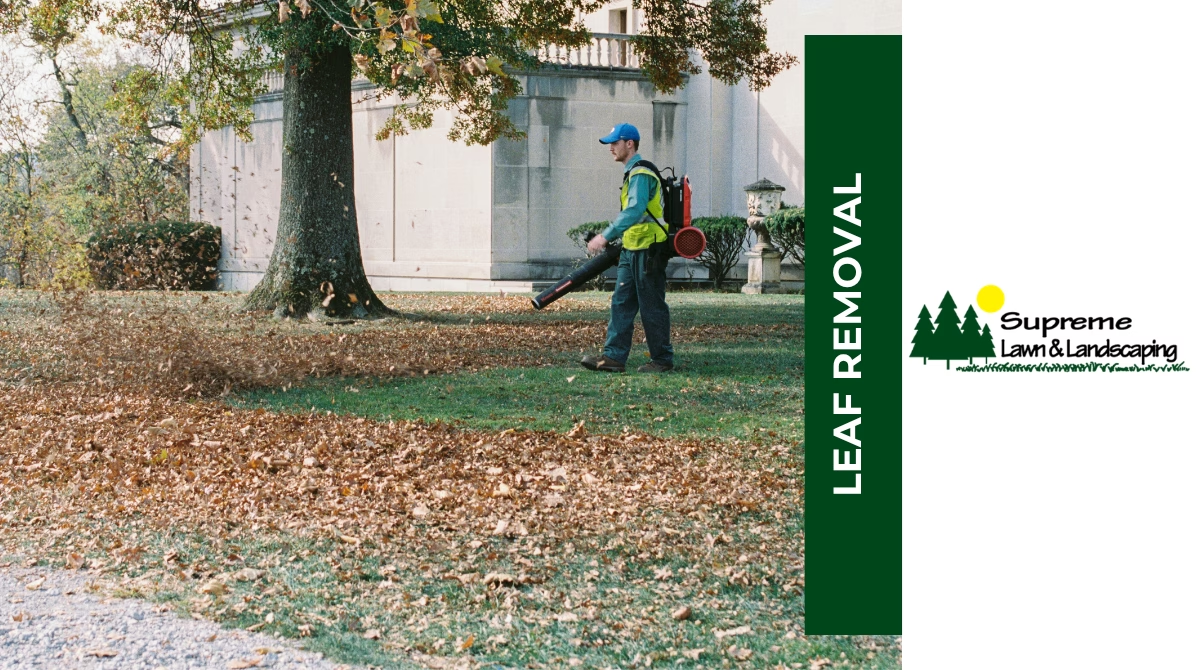
Every fall, Central Minnesota homeowners face the same question as the trees start dropping: run the mower over the leaves and call it good, or rake, bag, and haul them away? Both approaches have real benefits, and both can backfire on the wrong lawn. If you’re weighing DIY against hiring fall cleanup services in St. Cloud, MN, the right answer depends on how many leaves you have, what kind of trees they came from, and what shape your lawn is in heading into winter.
Here’s an honest look at when mulching makes sense, when removal is the better call, and how to tell which one your yard needs.
The Short Answer: It Depends on Leaf Volume
The University of Minnesota Extension offers a simple rule of thumb. Mulch tree leaves into the lawn until you can only see about half of the grass surface. Once less than half the lawn is visible, it’s time to start bagging and removing them instead.
That one guideline explains why neighbors on the same street can get completely different results. A yard with a couple of young trees might never need a rake. A yard under a row of mature maples or oaks can go from green to buried in a single windy week.
The Case for Mulching Your Leaves
When the leaf volume is manageable, mulching has some genuine advantages:
- It feeds the soil: Chopped leaves break down and return nutrients like nitrogen, potassium, and phosphorus to the lawn, which can reduce the need for extra fertilizer.
- It improves soil structure: Decomposing leaf pieces help the soil hold moisture and let water and air reach the roots more easily.
- It saves time and labor: No raking, no bags, no hauling. You’re mowing anyway.
- It keeps yard waste out of the landfill: The leaves stay on your property and do something useful.
Research summarized by University of Missouri Extension found that mulching tree leaves into lawns doesn’t cause thatch buildup or change soil pH, two common worries homeowners have about leaving leaves behind.
When Mulching Backfires
Mulching only works when the leaves actually get chopped small enough to settle down into the grass. When they don’t, you end up with the same problem as never cleaning up at all: a layer that smothers the lawn and invites snow mold over winter. Mulching tends to fail when:
- The layer is too thick: Missouri Extension advises against mulching when leaves pile up more than about 2 inches deep, since the mower leaves behind clumps that smother turf.
- The leaves are wet: Wet leaves mat and clump instead of shredding cleanly. UMN recommends mulching when leaves are dry.
- The leaves are tough: Thick, leathery leaves like oak take more passes to break down than thinner maple or birch leaves, and they’re slower to decompose.
- The lawn is newly seeded: Young grass from fall overseeding is fragile, and a heavy layer of leaf debris can block the light it needs to establish before winter.
- The trees had leaf disease: Some leaf diseases, like tar spot on maples, survive the winter on fallen leaves. University of Illinois Extension notes that raking and removing infected leaves in fall reduces the source of next spring’s infection.
Mulching vs. Removal at a Glance
| Mulching | Full Removal | |
|---|---|---|
| Best for | Light to moderate leaf cover | Heavy leaf cover and mature tree canopies |
| Leaf condition | Dry, thin, healthy leaves | Wet, matted, thick, or diseased leaves |
| Lawn benefit | Returns nutrients and organic matter | Full light and air reach the grass |
| Effort | More frequent mowing, multiple passes | Raking, blowing, bagging, and hauling |
| Main risk | Smothering and snow mold if overdone | Time and disposal if done yourself |
How to Tell Which One Your Yard Needs
Mulch Them If
- You can see at least half of your grass through the leaves
- The leaves are dry and break apart easily
- Your lawn is established and healthy going into fall
- You can mow often enough to keep up as leaves drop
Remove Them If
- Leaves cover more than half the lawn or pile up deeper than a couple of inches
- The leaves are wet, matted, or thick like oak
- You aerated and overseeded this fall and have new grass coming in
- Your maples had tar spot or other visible leaf disease this year
- Leaves are collecting in landscape beds, along fences, or near the shoreline
If you did aerate and overseed this season, protecting that new grass matters. Our post on why fall is the best time to aerate and overseed explains why that young turf needs every bit of light it can get before winter.
Most Yards Need a Little of Both
In practice, the best approach is often a mix. The open, sunny parts of the lawn with light leaf cover can be mulched right in. The areas under big trees, the corners where leaves drift, and the landscape beds usually need full removal. Lakeshore properties deserve extra care too, since leaves that blow into the water add nutrients that feed algae.
If you’re handling it yourself, keep mowing regularly as leaves fall so they never have a chance to build up, and make a second pass in a different direction for a finer shred. For more on the rest of the season’s tasks, see our fall lawn cleanup checklist for Central Minnesota and our guide to efficient leaf removal techniques.
Fall Cleanup Services in St. Cloud, MN
Not sure which approach fits your yard, or don’t have the time to keep up with it every week? That’s where we come in. Supreme Lawn & Landscaping provides fall cleanup services in St. Cloud, MN and nearby communities including Sartell, Sauk Rapids, and Waite Park. We look at your leaf volume, tree types, and lawn condition, then mulch where it helps and remove where it doesn’t, so you get the benefits of both without the risks.
Let Us Make the Call for You
Our lawn maintenance team will assess your property and handle the leaves the right way, whether that means mulching, full removal, or a combination. If you’re looking for dependable fall cleanup services in St. Cloud, MN, request a quote today before the fall schedule fills up. You can also learn more about everything we offer on our St. Cloud lawn and landscaping page.